
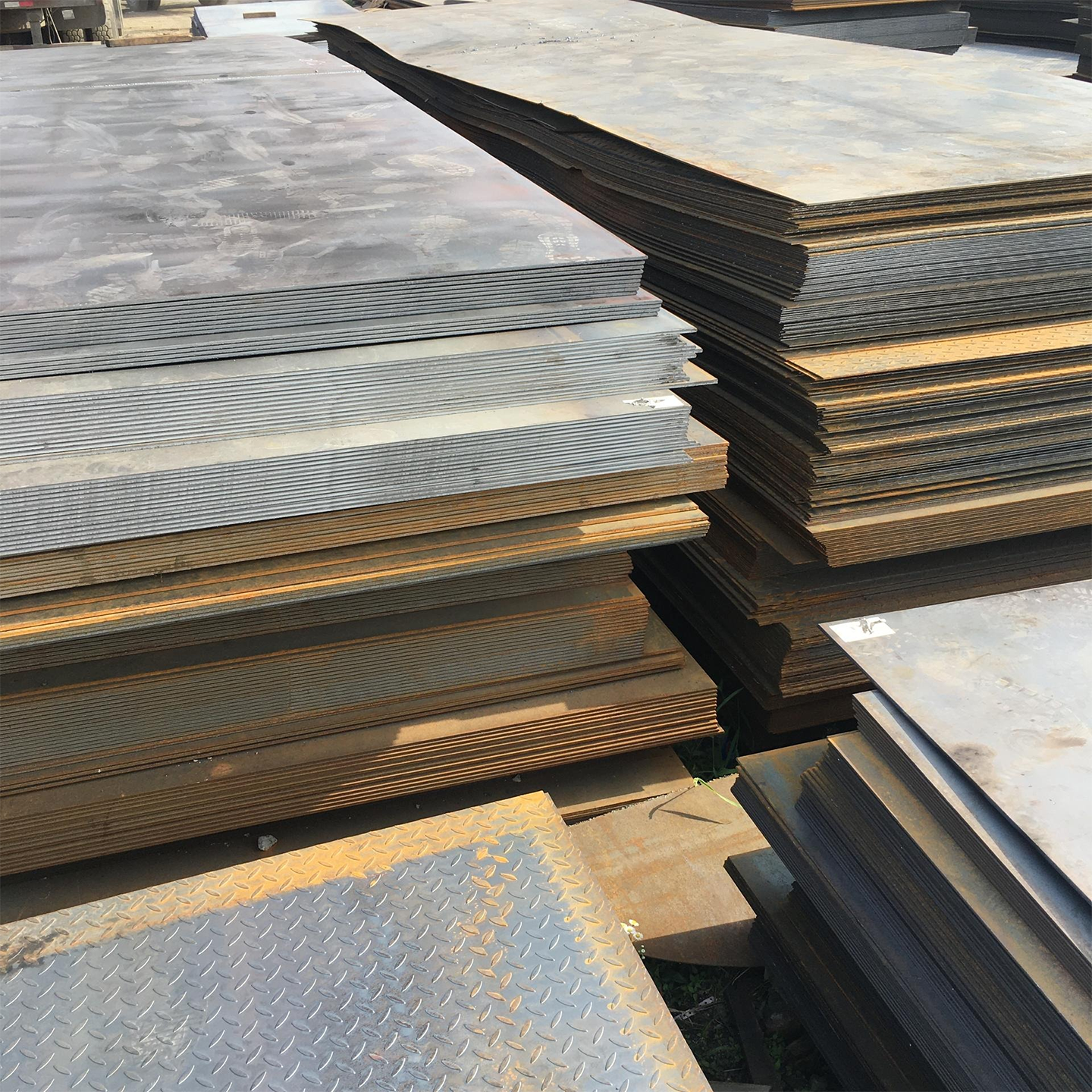
Low carbon steel plate refers to a carbon steel plate with a carbon content of less than 0.25%. It is also called soft steel because of its low strength, low hardness and softness. Low carbon steel plates occupy an important position in the steel industry and are widely used in many fields such as automobiles, construction, and machinery. The following is a detailed classification of low carbon steel plates:
1. Classification by plate making process
Cold rolled steel plate:
Cold rolled steel plate is a steel plate that is further rolled to the required thickness by a cold rolling mill at room temperature.
It has good surface quality, precise thickness dimensions, excellent plasticity and toughness, and is suitable for manufacturing parts that require high surface quality and high dimensional accuracy, such as automobile bodies, home appliance shells, etc.
Hot rolled steel plate:
Hot rolled steel plate is a steel plate made by rolling steel billets into steel plates through hot rolling mills at high temperatures.
The surface of hot rolled steel plates usually has a certain amount of iron oxide, but its strength and toughness are high, which is suitable for manufacturing structural parts that do not require high surface quality, such as building steel structures, bridges, etc.
2. Classification by use
Ordinary low-carbon steel plate:
Mainly used for the manufacture of general structural parts and components, such as non-critical components in the fields of construction, machinery, and automobiles.
Special low-carbon steel plate:
Including low-alloy high-strength steel and corrosion-resistant and heat-resistant composite steel plates, etc., with special mechanical properties and corrosion resistance, suitable for the manufacture of parts with high performance requirements, such as automobile engine hoods, petrochemical equipment, etc.
3. Classification by thickness
Low-carbon steel plates can also be classified according to their thickness, usually divided into the following three types:
Thick plate: Steel plate with a thickness of more than 6mm, mainly used for the manufacture of large structural parts and heavy machinery parts.
Medium and thick plate: Steel plate with a thickness between 3~6mm, suitable for the manufacture of medium-sized structural parts and components.
Thin plate: Steel plate with a thickness of less than 3mm, including cold-rolled thin plates and hot-rolled thin plates, widely used in the manufacture of thin and light structural parts and components in the fields of automobiles, home appliances, and construction.
4. Classification by chemical composition
Although the carbon content of low-carbon steel plates is generally low, in actual production, it can be further subdivided into multiple types according to its different chemical composition. For example, according to different deoxidation methods, low carbon steel can be divided into boiling steel and killed steel; according to the different contents of harmful elements such as sulfur and phosphorus, it can be divided into ordinary steel, high-quality steel and advanced high-quality steel.
In summary, low carbon steel plates have many classification methods, and different classification standards have different categories and uses. In practical applications, the appropriate type of low carbon steel plate should be selected according to specific needs.
Related Posts
- ▶ Low carbon steel plate refers to a carbon steel plate with a carbon content of less than 0.25%. It is also called soft steel because of its low strength, low hardness and softness. Low carbon steel plates occupy an important position in the steel industry
- ▶ Service Advantages
- ▶ As an important metal material, steel strip has a wide range of uses in modern industry due to its excellent physical and chemical properties. The following is a detailed summary of the main uses of steel strip:
Online Message
Leave A Message
If you are interested in our products and want to know more details, please leave a message here, we will reply you as soon as we can.